Posted by Samer Helbaoui
How FinTech Is Becoming Core Financial Infrastructure in 2026
For more than a decade, fintech has been defined by speed. Faster onboarding. Faster launches. Faster growth.
But as we move into 2026, the industry is entering a different phase one where trust, structure, and execution quality matter more than velocity alone. Fintech is no longer just about building products. It is about building financial institutions that can scale responsibly across markets, regulations, and investor expectations.
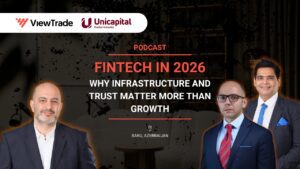
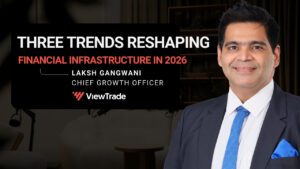
In a recent ViewTrade conversation, Samer Helbaoui, VP – Gulf Growth at ViewTrade, spoke with Laksh Gangwani, Chief Growth Officer at ViewTrade, and Vugar Namazov, CEO at Unicapital Investment Company, as they explored why fintechs are no longer operating at the edges of the financial system. Instead, they are becoming core financial institutions, expected to meet the same standards of reliability, compliance, and operational maturity as traditional banks.
This shift is subtle, but it’s reshaping how global investing platforms are built, operated, and evaluated.
What Becomes Hard After Access Is Solved
In its early years, fintech focused on opening doors. Expanding access to markets, instruments, and digital investing tools was the core problem to solve.
In many regions, that problem is largely behind us.
What comes next is less visible and far more demanding. Once capital is flowing through live systems, reliability becomes non-negotiable. Small issues compound quickly. A reconciliation delay. A settlement process that doesn’t scale cleanly. A reporting workflow that works until it doesn’t.
None of this shows up in a product demo. But it’s the machinery everything else depends on. Investors may never see these layers, yet they feel them immediately when something breaks.
Why Infrastructure Is Now the Differentiator
Investors today expect global exposure to feel seamless. Regulators, partners, and institutions expect something deeper: consistency, control, and accountability at scale.
This is often where momentum slows, even if growth metrics still look healthy.
Platforms built on fragmented systems tend to accumulate risk quietly. Manual workarounds hold for a while, then begin to strain. Compliance becomes harder to coordinate. Operational complexity increases in the background, until it’s impossible to ignore.
Strong infrastructure doesn’t eliminate complexity – it absorbs it. At its best, it supports:
- dependable execution across markets
- accurate settlement and reconciliation
- secure custody and proper asset segregation
- transparent reporting that stands up to scrutiny
- flexibility across investor types and jurisdictions
These foundations rarely make headlines, but they allow platforms to grow without constantly rebuilding what sits underneath them.
The Discipline Behind Sustainable FinTech Businesses
Spend enough time speaking with operators in this space and one idea keeps resurfacing: discipline compounds.
Companies that resist shortcuts whether in architecture, operations, or funding, tend to build more resilient businesses over time. Staying grounded in fundamentals early creates room to adapt later. Reinvesting carefully and designing systems to last proves more valuable than chasing short-term momentum.
It’s not the fastest path. But it’s often the one that holds up.
After years of growth-at-all-costs thinking, this kind of discipline is starting to look less conservative and more strategic.
Global Expansion Is an Infrastructure Challenge
Global investing is not a single market it’s a collection of regional realities.
Each jurisdiction comes with its own regulatory expectations, operating norms, and investor protections. Retail investors, high-net-worth clients, and institutions all require different structures beneath what may appear to be the same platform experience.
The fintech companies that scale internationally tend to treat expansion as an infrastructure problem, not just a market entry exercise.
That means building systems that can adapt locally while remaining coherent globally. Systems that support multiple clearing and custody arrangements, maintain execution quality across regions, and scale without weakening governance.
None of this is glamorous. And that’s exactly why it matters.
Where ViewTrade Fits in This Evolution
As fintech evolves into core financial infrastructure, companies like ViewTrade operate largely behind the scenes supporting brokers, platforms, and institutions that need global investing to work reliably.
Rather than competing on front-end experiences, ViewTrade focuses on the foundation:
- market access
- execution and settlement
- compliance-ready infrastructure
- scalable operating models
This reflects a broader industry shift. Some of the most critical fintech companies of the next decade may not be the most visible to end users but they will be the ones everything else depends on.
FinTech’s Institutional Future
The fintech narrative is changing. Success is no longer measured only by user growth or launch velocity. Increasingly, it’s judged by operational resilience, regulatory credibility, and long-term trust.
Fintech no longer sits at the edges of the financial system. In many cases, it is the system people rely on.
That shift raises the bar not just for technology, but for responsibility. And it’s shaping which companies are built to last as fintech becomes part of the financial core.

Comments
Latest Posts





Related Posts