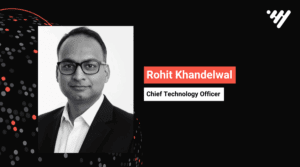
AI, Tokenization, and the Future of Capital Markets | A Conversation with Rohit Khandelwal
December 18, 2025
Posted by Rohit Khandelwal
AI, Tokenization, and the Future of Capital Markets | A Conversation with Rohit Khandelwal
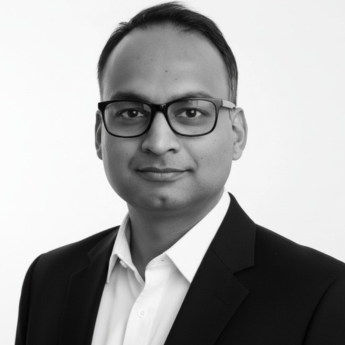
Rohit Khandelwal, Chief Technology Officer at ViewTrade, talks about how capital markets are changing, practical impact of artificial intelligence, tokenization, and real-time infrastructure on how financial systems are built and operated globally.
Technology Shifts Reshaping Capital Markets
Rohit begins by sharing three technology shifts that, in his view, are already influencing the next phase of capital markets infrastructure.
The first is agent-based AI and how it is being applied to automate workflows across trading, operations, and risk. Automation has existed for years, but newer AI systems are becoming more context-aware. By drawing insights from multiple data sources such as market activity, events, and news, these systems can support faster and more consistent decision-making across financial platforms.
The second shift is the steady progress of digital money rails. Stablecoins, central bank digital currencies, and other digital settlement mechanisms are moving closer to real-world usage. As these rails mature, they have the potential to make capital movement more efficient and reduce friction across markets.
The third area is the move toward real-time settlement and tokenized infrastructure. Traditional settlement cycles were built for a slower, regional world. Today, markets are moving toward faster settlement, supported by tokenized systems that change how assets are issued, transferred, and reconciled across borders.
How AI Models Are Evolving
Rohit discusses how AI models themselves are changing. Earlier generations of models struggled with consistency and long-term memory, which limited their usefulness in complex financial environments. Recent research into model architecture is focused on addressing those gaps, with the goal of making AI systems more reliable and better suited for real-world decision support.
Modern Markets vs. Legacy Systems
Another key theme in the conversation is the challenge of modernizing legacy systems. Many core platforms were built for slower settlement cycles and tailored to specific regions. Today’s markets demand something different: faster settlement, global scalability, and the ability to adapt quickly to operational and regulatory change.
Rohit explains why financial institutions increasingly need cloud-native, modular frameworks that can bridge older systems with newer infrastructure allowing them to operate globally while remaining flexible as markets evolve.
AI in Trading, Operations, and Risk
The discussion also covers how AI-driven automation is being applied across the financial value chain. In trading, this includes smarter order routing informed by real-time data. In operations, it means faster reconciliations and reduced manual processing. In risk management, AI is helping identify unusual patterns and potential issues more quickly than traditional approaches.
Together, these capabilities are helping financial platforms improve efficiency while supporting more complex, always-on market environments.
What Comes Next
Looking ahead, Rohit points to two developments that are likely to shape the next phase of capital markets technology. One is tokenization at scale, where more asset classes are expected to be offered through digital structures. The other is the continued evolution of AI systems, driven by new architectures that improve context, memory, and decision intelligence.
ViewTrade’s Technology-First Direction
Rohit also reflects on ViewTrade’s own journey. The firm is evolving from a broker-first model toward a technology-first approach, focused on real-time, cloud-native, and globally deployable platforms. This shift allows ViewTrade to support clients that are building modern investment infrastructure, rather than relying solely on traditional brokerage services.
The conversation offers a grounded look at how capital markets technology is changing—based on practical experience, long-term thinking, and a clear focus on building systems that can scale globally.
Comments
Latest Posts

Related Posts