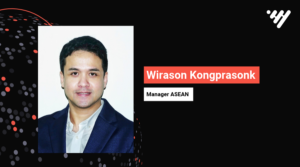
Posted by Wirason Kongprasonk
The Next Phase of Thai Fintech Will Be Built Behind the Screen
Thailand has made significant progress in digital payments, but brokerage technology has not kept pace. For banks, brokers and fintech companies trying to offer global investing, the real challenges are hidden. It’s sitting inside and behind the app: onboarding, order execution, custody, market data, settlement and compliance. You can connect those pieces using API-driven architecture and bring products to market quicker with less cost.
- Payments are advanced in Thailand. Investing infrastructure is roughly one step behind.
- Siloed systems and manual work at back-office are the main gaps.
- The SEC’s digital capital market reforms could make new investment services quicker to launch.
- Global investing is mostly a technology and compliance problem, not a front-end one.
- For most brokers, partnering beats building everything in-house.
Why is Thailand’s brokerage infrastructure the next fintech priority?
I think we are still one step behind.
Look at what Thailand already does well. PromptPay handled more than 2.5 billion transactions worth nearly THB 5 trillion in March 2026, and it is now treated as critical national infrastructure. Paying someone now takes seconds.
Investing doesn’t feel like that yet. Plenty of brokerage processes are still quite traditional so institutions struggle to adapt. Investors notice. Investors want the speed and convenience that they get from their banking app, and they expect the same experience when they invest. That means the infrastructure underneath must deliver it.
In Thai brokerage infrastructure, where are the biggest gaps?
Siloed systems. An app can look modern while the back office still runs on manual work. Reconciliation is the classic example. So is anything involving international investment products, where the processes get complicated fast.
How do the SEC’s reforms affect Thai brokers?
I see them as a big step forward. In August 2026 the Cabinet approved four draft capital market laws covering six areas, including promotion of the digital capital market and supervision of securities and derivatives business operators. The digital reforms would widen legal recognition of electronic processes and add rules for providers of systems that matter to capital market operations. The SEC’s 2026-2028 plan also points toward tokenisation and supervisory technology.
Less paperwork lowers costs. The bigger win is speed. With the right framework, Thai brokers can use global technology and APIs to offer overseas stocks and fractional shares, subject to applicable requirements, instead of building every component themselves. Regulation and technology have to move together.
Demand is already there. The SET’s fractional depositary receipts (DRx) let people buy foreign securities in baht, with no foreign account or currency conversion. They carry risk like any investment, but they show how much appetite exists for simple global access.
What does a Thai broker need to launch global investing?
Mostly technology and compliance. Connecting to an overseas exchange is the easy part. A broker also needs:
- reliable order execution
- foreign currencies exchange handling
- international tax support, such as W-8BEN documentation for US securities
- trusted custodians to safeguard client assets, often through omnibus account structures
All of it must work together and meet regulatory requirements, which keep moving.
Build, buy or partner? How Thai brokers can add global investing
Building in-house is expensive and slow, especially across several markets. Here is a general comparison:
| Approach | Best for | Trade-off |
|---|---|---|
| Build in-house | Large institutions with deep engineering teams | Highest cost and longest timeline |
| Trading API integration | Brokers keeping their own app and adding specific capabilities | Needs internal developers |
| White label brokerage | Banks and fintechs wanting a faster launch | Less control over the full stack |
| Introducing broker model | Firms focused on distribution and clients | Depends on the carrying broker’s capabilities |
The right choice depends on strategy, but the principle holds. Build on existing technology, cut complexity, and spend your energy on customers.
What happens behind the scenes when a customer places a trade?
A lot, usually within seconds.
- Pre-trade checks. The system verifies buying power and applies risk controls.
- Routing. The order goes to execution, depending on the market and the broker’s arrangements.
- Execution and updates. Order status updates, and cash and position records are processed.
- Post-trade flow. The data moves to clearing and settlement to custody and to reporting.
Ideally this is Straight Through Processing (STP), with minimal manual intervention. The customer sees one confirmation. Behind it, several systems have to agree.
Which systems need to work together?
- The customer-facing app
- The order management system (OMS)
- Market data systems, usually fed by a market data API, for prices and quotes
- Account and ledger systems
- Clearing and settlement infrastructure
- Compliance tools for risk and regulatory requirements
Each can be excellent on its own. What matters is how accurately and quickly they talk to each other.
What goes wrong when trading, custody and compliance systems don’t connect?
Three things, mainly:
- Frustrated customers. A deposit doesn’t show up, or a bought stock is missing right after the trade.
- Weaker records and reporting. Accurate books and timely regulatory reports get harder.
- Higher operating costs. Manual workarounds and extra checks pile up.
What should Thai banks and brokers prioritise over the three to five years?
Open, modular API‑driven architecture is key. Thai banks and brokers do not have to build every layer themselves. They can partner with B2B infrastructure provider and add only the parts that are needed. A broker might rely on an external provider to offer global market access and execution while still operating its own application.
This approach also makes embedded investing realistic. A bank or app can add investing to its existing customer experience without becoming a full brokerage.
Questions to ask any infrastructure provider
- Which markets and asset classes does it cover?
- How are custody and settlement handled?
- Does it support fractional shares and FX?
- What compliance and tax tooling is built in?
- How do APIs integrate with our OMS and ledger?
FAQ
What is brokerage infrastructure?
The technology powering an investing app: onboarding, order management, execution, market data, custody, settlement, ledgers and compliance reporting.
What is straight-through processing (STP)?
An automated way to move a trade from when it’s placed to when it is finished with very few manual steps, which helps cut down on mistakes, delays and expenses.
What is a trading API?
A set of connections allowing a broker plug order execution, market data or global market access into its own app without rebuilding its whole platform.
What is white label brokerage?
A model where a provider supplies the brokerage technology and services under the client’s own brand.
What does a Thai broker need to offer global investing?
They will need a reliable execution, foreign exchange handling, international tax support, trusted custody and compliance tooling. All these within Thai regulatory requirements.
Can Thai investors buy overseas stocks and fractional shares?
Yes, there are several options depending on the broker and the products they offer and regulations. Thai investors can access overseas markets through DRx listed on the SET or brokers that offer global market access. It’s important to check the broker’s licensing and understand the risks before investing.

Comments
Latest Posts
Related Posts