Thailand is Attracting Global Capital. Financial Infrastructure Must Globalise with It
October 30, 2026
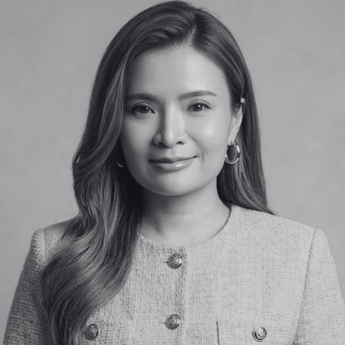
Posted by Amber Rinlapat Jiranaranun
Thailand is Attracting Global Capital. Financial Infrastructure Must Globalise with It
Thailand’s capital-market reforms are raising supervision standards and opening the door to wider global investing. Banks and brokers wanting to offer global market access need more than an app. They need market access, clearing, custody, cross-border compliance and local support, and for most of them, buying that infrastructure from a partner is faster than building it.
What is changing in Thailand’s capital markets?
The biggest signal is regulation. In August, the Cabinet approved four draft capital-market laws from the SEC. They cover the Securities and Exchange Act, the Derivatives Act, the Trust for Transactions in Capital Market Act, and an amendment to the Emergency Decree on Digital Asset Businesses. The drafts still have to pass through Parliament and be published in the Royal Gazette before they take effect. I expect the new rules to arrive in 2027. The direction is clear: a more modern, better-supervised market that global investors can trust.
The second change is the investors. Thai investors aren’t only looking at the SET (Stock Exchange of Thailand) anymore. They want US stocks, ETFs and fractional shares, and they want them in the same app they already use.
Capital flows are already moving with them. Brokers quoted in the Thai press noted that foreign investors had been the largest net buyers of Thai stocks in 2026 before selling heavily in early August, with some brokers expecting money to rotate toward US equities. Global capital moves fast in both directions, which is why the infrastructure behind a market matter as much as the market itself.
How will the reforms affect local banks and brokers?
It raises the bar. Higher standards for supervision and investor protection mean institutions need stronger compliance and infrastructure.
But it’s also an opportunity. A more trusted market attracts more capital, and the institutions that are ready will capture it.
Why are Thai financial institutions interested in global investing?
In almost every meeting I have with Thai banks and brokers, global investing is on the roadmap. In the last few months I’ve spoken with major brokers and top-tier banks, and most of them asked about US equities first.
Three things are driving it:
- Client demand. Investors read about global companies every day and want access.
- Competition. Regional and digital-first platforms already offer it, so clients move if local players don’t.
- Regulation. It is making the market more open and more trusted.
None of this is brand new. Thai SEC data showed local brokers’ revenue from global stock trading rising 200% in the first half of 2021. What has changed is that global investing is moving from a niche offer to something mainstream clients expect.
What are the biggest challenges in launching cross-border investing services?
It’s rarely the app. It’s everything behind it:
- Market access and clearing
- Custody of foreign securities
- Cross-border compliance
- Tax documentation such as the W-8BEN and QI status
- FX and funding
Then there’s support. Many providers run everything from overseas, so there’s no one local to call when something goes wrong.
Is Thailand’s technology infrastructure ready for international investing?
Partly. The gaps I see most often are:
- Custody and settlement of foreign securities
- Cross-border tax and compliance
- Onboarding that works for both Thai and US requirements
- Support across time zones, in Thai
Many teams still think they have to build all of this themselves. That’s the biggest gap. It should be a buy decision, not a build decision.
What should financial institutions expect over the next three to five years?
I expect global investing to become a standard product, not a premium extra. Clients will expect it the same way they expect mobile banking today. The institutions that pick the right infrastructure partner now will be launching while others are still building.
What should banks and brokers do today?
- Look at what your clients are already asking for.
- Be honest about where your current set-up stops.
- Start the partner conversation early, so you’re ready when the new rules come in 2027.
FAQ
What are Thailand’s four draft capital-market laws?
They amend the Securities and Exchange Act and the Derivatives Act, and add the Trust for Transactions in Capital Market Act and changes to the digital asset decree. They cover six areas, including digital capital-market promotion, supervision of securities and derivatives operators, fundraising, audit-firm supervision and law enforcement.
Can Thai investors buy US stocks?
Yes, through SEC-licensed Thai brokers and platforms. The demand is now pushing banks and brokers to build or buy the infrastructure to offer it at scale.
What do banks need to offer global investing?
Market access, clearing, custody and settlement, tax and compliance support (including W-8BEN and QI), FX and funding, and local-language support.
Should banks build or buy this infrastructure?
For most institutions, buying through a specialist partner is faster and lower-risk.
Comments
Latest Posts

Related Posts